Project Overview
Project: Muara Jambi Cultural Heritage Site
Year: 2021 – 2022
Type: Cultural heritage revitalization
Partner: Ministry of Education & Culture, local communities
Location: Jambi, Indonesia
Size: ±12 ha
Status: Completed
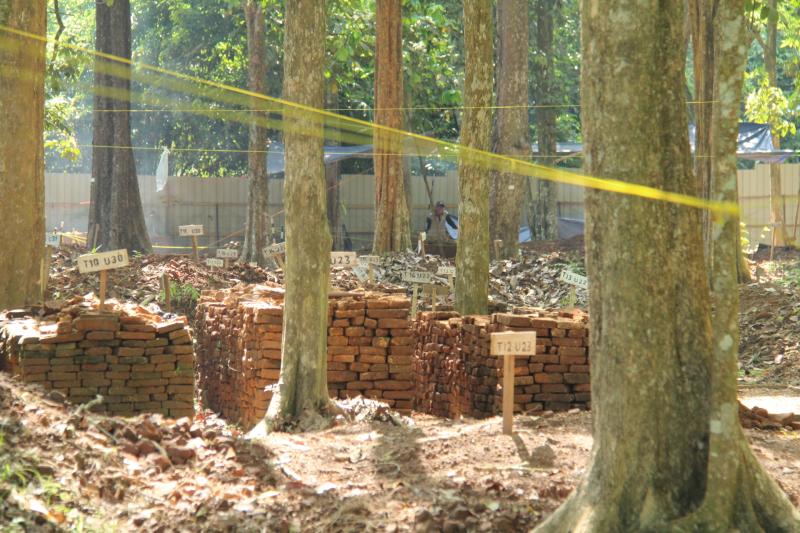
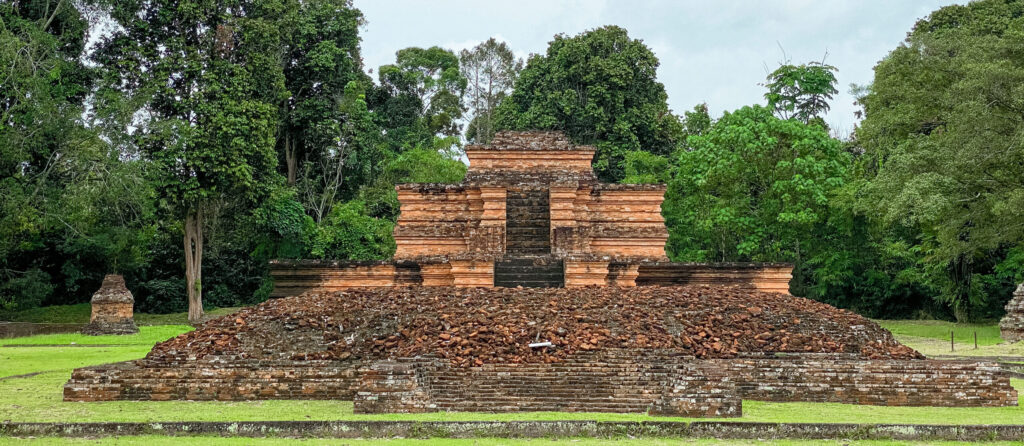
Stretching along the Batanghari River in Jambi Province, Muara Jambi is a remnant of a civilization that flourished between the ninth and twelfth centuries, during the height of the Sriwijaya era. More than one hundred brick temples stand across nearly thirty hectares of land, arranged with an order and precision that has survived centuries without mortar. Ancient canals link one structure to another, quietly revealing how knowledge, religion, and daily life once flowed through this landscape.
But Muara Jambi is not an empty monument. Villages sit at its edges. Vendors set up stalls. Visitors cycle between temples. Life continues here, as it has for generations. And this is where the challenge begins.
For years, the site existed in a state of quiet imbalance. The central government was responsible for preserving the heritage, while the local government managed tourism and collected entrance fees. Economic activity happened inside the protected area without clear legal standing. Maintenance costs were carried by the state, yet the economic value generated by visitors never fully returned to the asset itself. Nothing appeared broken on the surface, but beneath it lay fragmented authority, informal arrangements, and missed opportunities.
This project began with a simple question. How do you protect a historic site that people still use every day?
The answer was not to add more attractions or impose stricter barriers. The first task was to bring order to what already existed. Before thinking about festivals, branding, or tourism growth, Muara Jambi needed clarity. Clarity about who manages the site, how the land is used, and how benefits are shared.
The turning point came through formal cooperation between the central and the local government. For the first time, both sides agreed on a shared framework for managing Muara Jambi. Responsibilities were clearly defined. Preservation and utilization were no longer treated as competing goals. Instead, they became parts of the same system.
With governance in place, attention shifted to the most sensitive areas. Several buildings owned by the local government stood on state land without legal basis. Informal kiosks and bicycle rentals occupied parts of the heritage zone. These activities supported local livelihoods, but they also created legal uncertainty and physical disorder in a protected space.
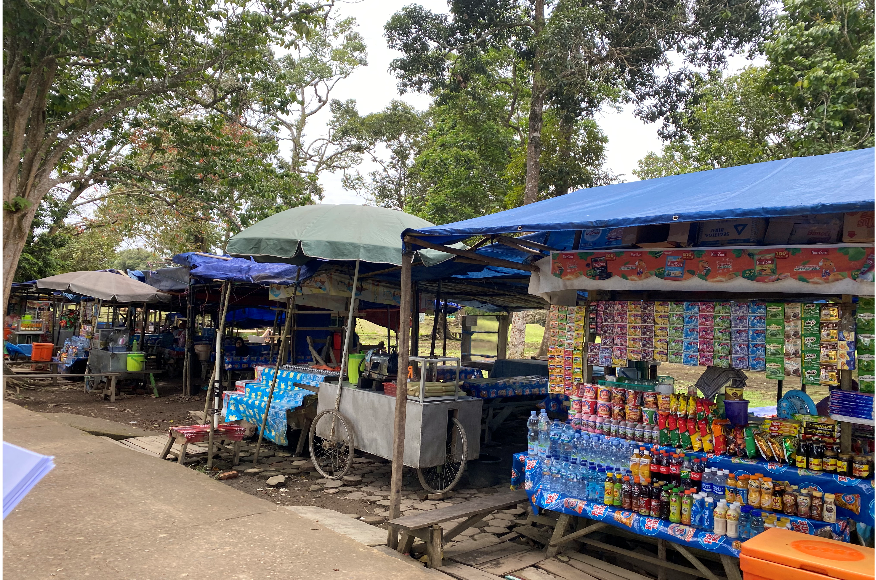
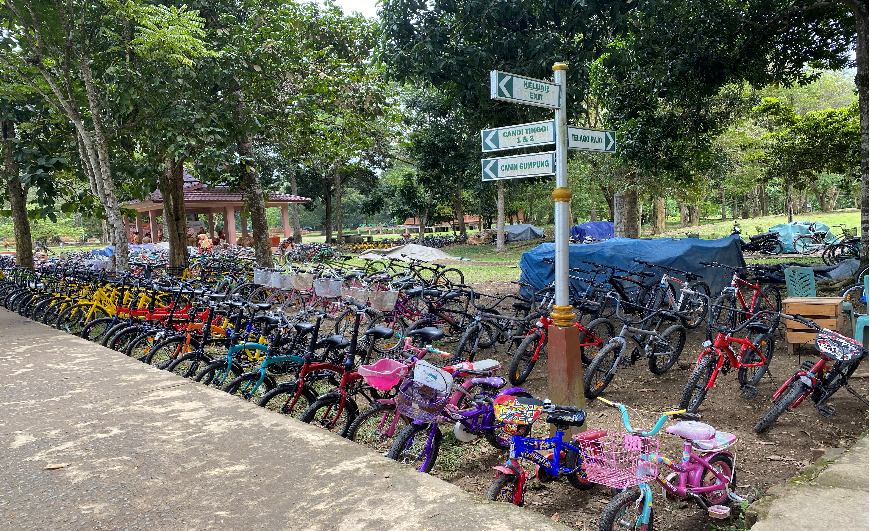
The solution was not removal, and it was not neglect. It was formalization. Existing uses were legalized through state asset instruments. Vendors were relocated into proper kiosks and became formal tenants. The site immediately felt more open and coherent. Pathways cleared. Visual clutter receded. Daily life continued, but within rules that respected the site’s cultural value.
One of the most meaningful changes happened along the ancient canals. Once overgrown and forgotten, these waterways were restored and brought back into use. Local communities began cultivating endemic fish species in the canals, reviving ecological practices that aligned naturally with the landscape. Income was generated, not through extraction, but through stewardship.
What made this approach powerful was its intention. Economic activity here was designed to support conservation, not compete with it. Profits from fish cultivation were reinvested into cultural and arts activities. Communities became caretakers of the site, not just beneficiaries of tourism.
At the same time, small businesses around Muara Jambi were supported to grow more resilient. Digital payment systems were introduced. Training and mentoring helped vendors transition into more stable operations. The local economy became more transparent and better connected to the wider region.
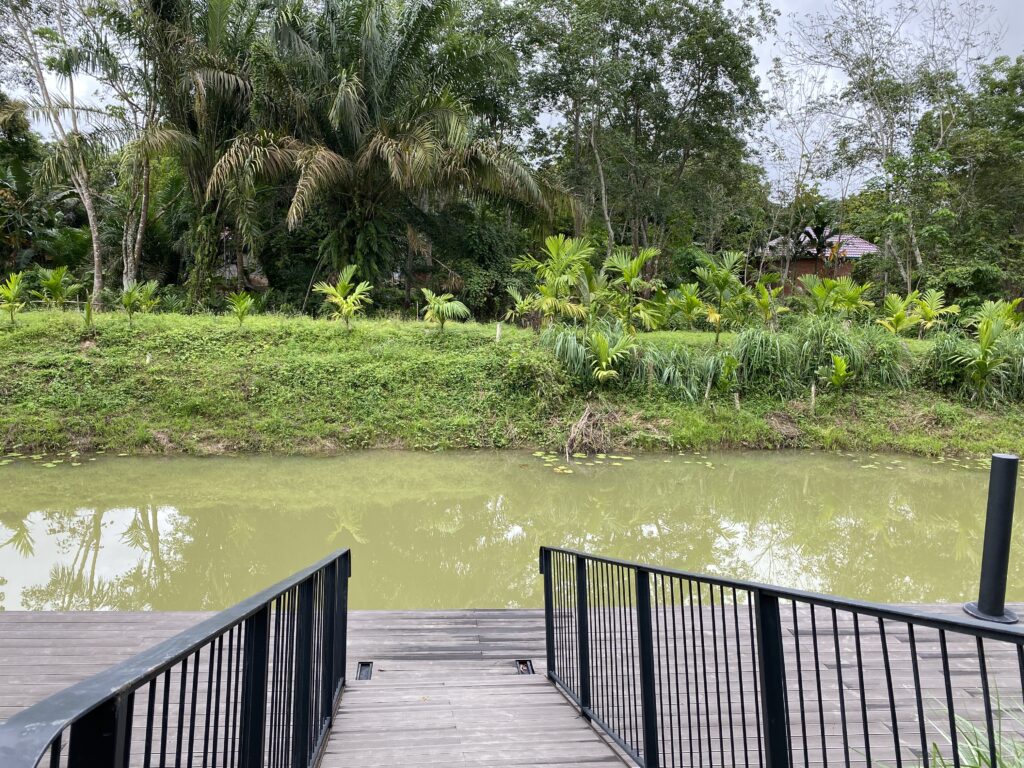
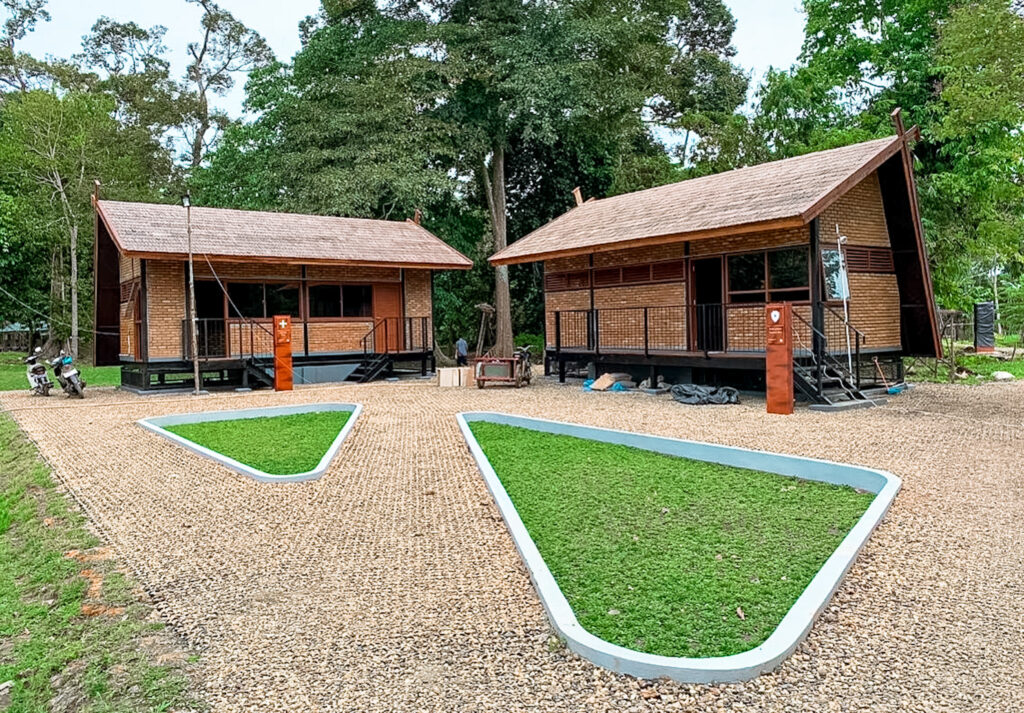
As order settled in, Muara Jambi began to speak more clearly to its visitors. For a site of such historical importance, it had long remained underrepresented in the public imagination. The goal was not to turn it into a spectacle but to make its story easier to access. Cultural events returned as expressions of continuity rather than performance. Public transport connections improved, making the site more accessible without overwhelming it.
Gradually, the impact became visible. Restoration works created jobs for local and professional workers. Small businesses experienced significant income growth. The state began capturing value from an asset it had long maintained without return. Most importantly, relationships changed. Communities were no longer viewed as a risk to preservation. They became partners in care.
Muara Jambi did not become a theme park. It became something quieter and more enduring. A living cultural landscape where heritage, governance, and everyday life could move forward together.
This project showed that protecting history does not require pushing people away. When institutions are aligned and communities are included, preservation becomes stronger. What began as an effort to organize a fragmented asset became a lesson in how living heritage can be managed with respect, clarity, and care.
Economic impacts
- Rp22.18 billion in total economic benefits
- 355 jobs created through restoration and site activities
- 1.5x economic multiplier across regional sectors
- Rp2.4 billion annual income potential for local businesses
Social Impacts
- Communities engaged as active partners in heritage management
- Improved livelihoods through local enterprises and digital payments
- Cultural heritage integrated into education and daily life